
We are living in an era where Artificial Intelligence has quietly entered every corner of life. School children today can experience history as if they are living inside it. Office workers use AI to finish in minutes what once took hours. And whether people are aware of it or not, AI is reshaping how the world creates, communicates, and works.
So the question was always coming how long before the creative field felt it too?
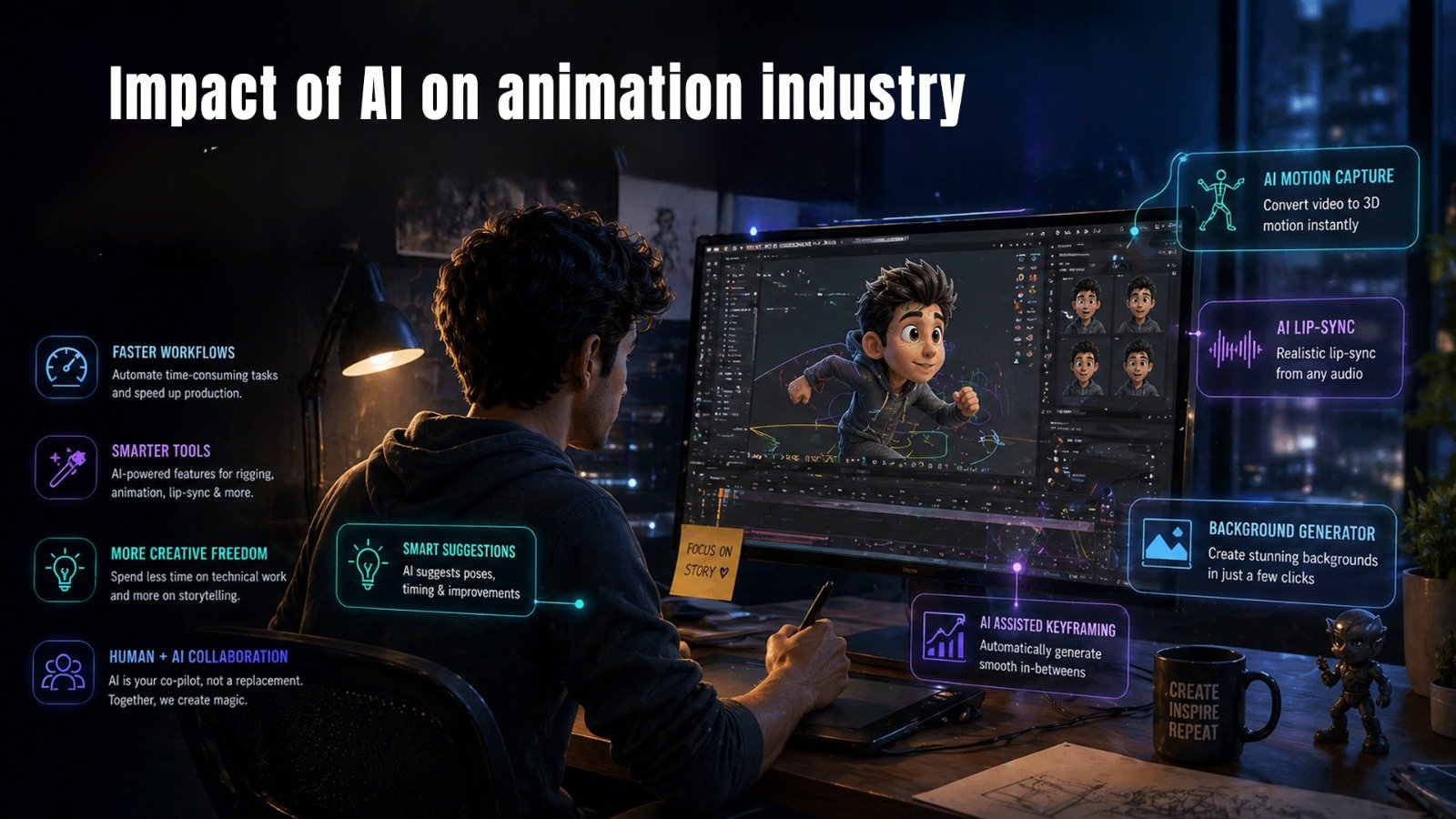
The answer is, it already has. AI is rapidly reshaping the creative sector, acting not as a replacement for human talent but as a powerful collaborative tool. It automates technically demanding, time-consuming tasks like storyboarding, sound mixing, and rendering, freeing artists to pour their energy into what actually requires a human mind, conceptual thinking, storytelling, and artistic direction. Alongside this excitement, the industry is also grappling with real concerns around copyright, fair compensation, and the risk of job displacement for those who don’t adapt.
The creative professionals who will thrive in this landscape are not the ones who fear AI. They are the ones who know how to use it.
The Problem With How India Has Been Teaching Creative Skills
Walk into most animation and VFX institutes in India today and you’ll find classrooms teaching the same software-first curriculum that existed a decade ago. The tools may have updated, but the approach hasn’t. In many of these institutions, courses are run by professors who haven’t worked on a live production in years. Students sit through theory, collect certificates, and graduate without a single frame of real work in their portfolio and then spend months wondering why studios aren’t calling.
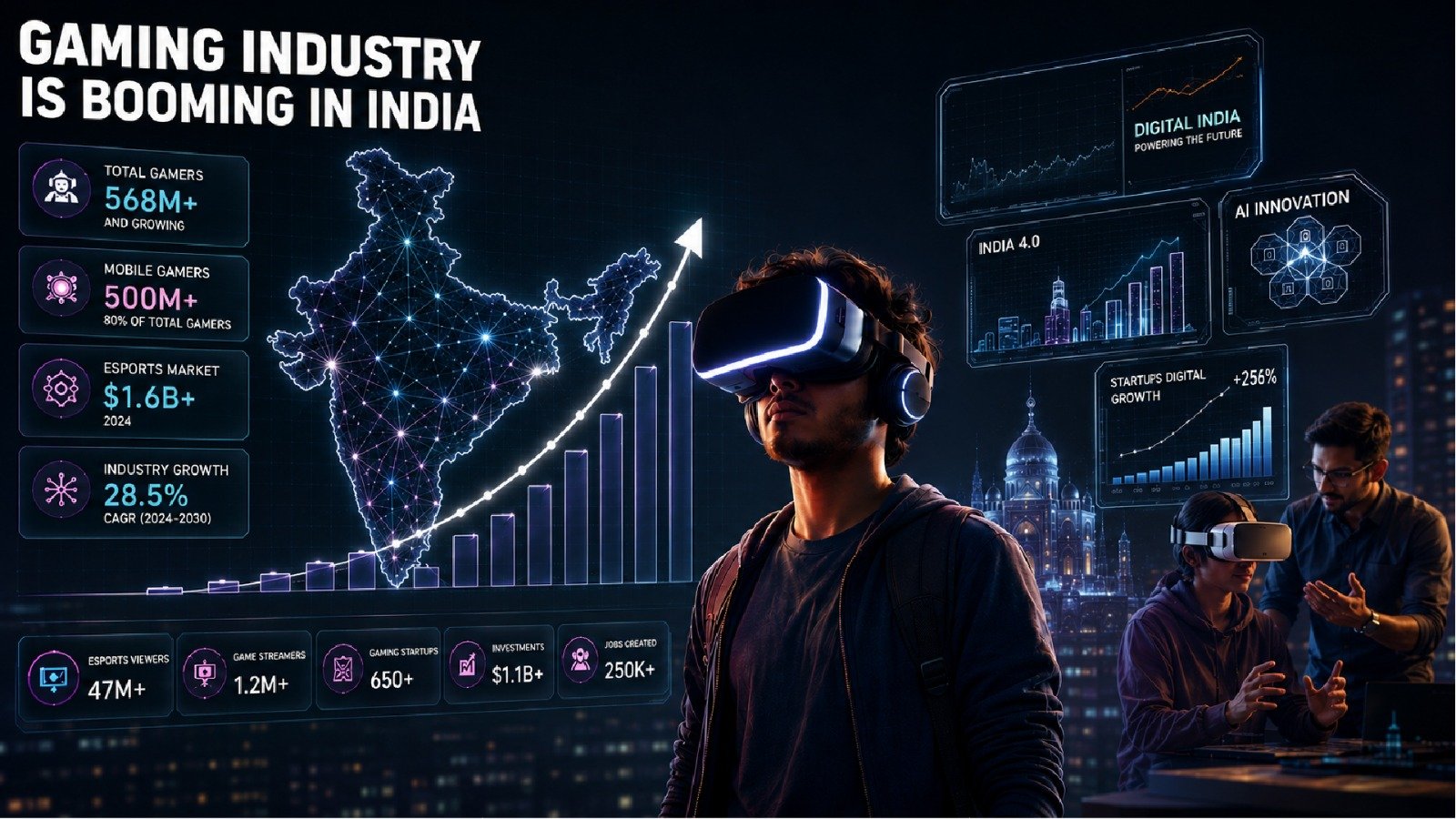
Meanwhile, India’s creative industry is growing faster than its talent supply. OTT platforms are commissioning content at scale. The gaming sector is expanding. Advertising and digital media are demanding more sophisticated visual output every year. The industry needs skilled, job-ready creators and the gap between what institutes are producing and what studios actually need has never been wider.
This is the gap Toads Academy was built to close.
First, What exactly is Generative AI?
Before understanding why Toads calls itself India’s First Gen AI Academy, it helps to understand what Generative AI actually is.
Generative AI is a branch of artificial intelligence that can produce original content such as images, text, audio, video, and code etc. by learning patterns from large datasets. It doesn’t simply analyse or sort existing information. It creates something new from what it has learned.
Unlike traditional AI, which follows strict programmed rules or makes predictions from fixed inputs, Generative AI functions more like a creative partner. It uses advanced deep learning techniques , including large language models and diffusion models to understand instructions (called prompts) and generate unique, context-aware outputs. Think of it as giving a highly capable creative assistant a brief and watching it execute.
For anyone working in animation, VFX, gaming, or graphics, understanding how to direct and use these tools is no longer optional. It is a professional requirement.
What “India’s First Gen AI Academy” Actually Means
This isn’t a marketing tagline. At Toads Academy, Generative AI isn’t a single elective bolted onto a traditional curriculum – it is woven into the fabric of every program.
Yes, there is a dedicated AI Pro course. But more importantly, AI workflows run through the Animation, VFX, Gaming, and Graphics programs as well, so students develop genuine fluency with these tools in the context of real creative work not in isolation.
The guiding principle at Toads is straightforward: AI is a technology, not a threat. It doesn’t replace the artist. It becomes a tool in the artist’s hands. What studios globally are already discovering and hiring for is the AI-fluent creative: someone who can ideate, direct, and refine AI-generated output while bringing the artistic judgment and storytelling instinct that no model can replicate. Students who graduate without this fluency are, quietly, already behind. Toads makes sure its students are ahead.
Real Projects. Real Credits. Real Showreels.
At Toads Academy, every student works on live commercial projects during their training. The internship model is 100% project-based students are placed on active titles, not practice exercises with fictional briefs.
The result is a showreel that carries actual broadcast credits. When a Toads graduate walks into a studio audition, they are not presenting student work. They are presenting professional output. That difference is immediately visible to anyone reviewing a portfolio and it is what converts interviews into offers.
The AI Pro Course : What Students Actually Learn
The AI Pro program at Toads Academy is designed to give students both the theoretical foundation and the practical capability to work with Generative AI tools in a professional creative context.
The curriculum covers how generative models are built and trained including Generative Adversarial Networks (GANs), Variational Autoencoders (VAEs), and transformer models and applies them to real creative outputs across images, video, text, and audio generation.
Software covered in the program:
Photoshop, ChatGPT, Premiere Pro, Runway, Leonardo.AI, Kling AI, and Stable Diffusion.
These are not experimental tools. They are the platforms that studios and creative agencies are already integrating into production pipelines. Knowing how to use them fluently and knowing when and why to use them. This is the skill set the industry is actively seeking.
The Bigger Picture
India’s media and entertainment industry is on a sustained growth curve, driven by OTT expansion, a maturing gaming market, and increasing global demand for Indian creative production talent. The professionals who will lead this next phase are not those who simply learned software. They are those who learned to think creatively, work inside real production environments, and adapt to the technologies reshaping the industry in real time.
Toads Academy backed by two decades of studio experience, led by working industry professionals, and built around a curriculum that treats Generative AI as a core creative skill rather than an afterthought is training exactly those professionals.
If you are a student who has been told that a creative career is not a “real” career, or a young artist who graduated with theory but no pipeline experience, or someone in media who can feel the industry shifting beneath them this is where that changes.
The window to get ahead of this curve is open. It won’t stay open forever.